 Skip to content

No products added!
October 24, 2026

Written by kingsmanbespokeae@gmail.com
How to Choose Between a Two-Piece and Three-Piece Suit
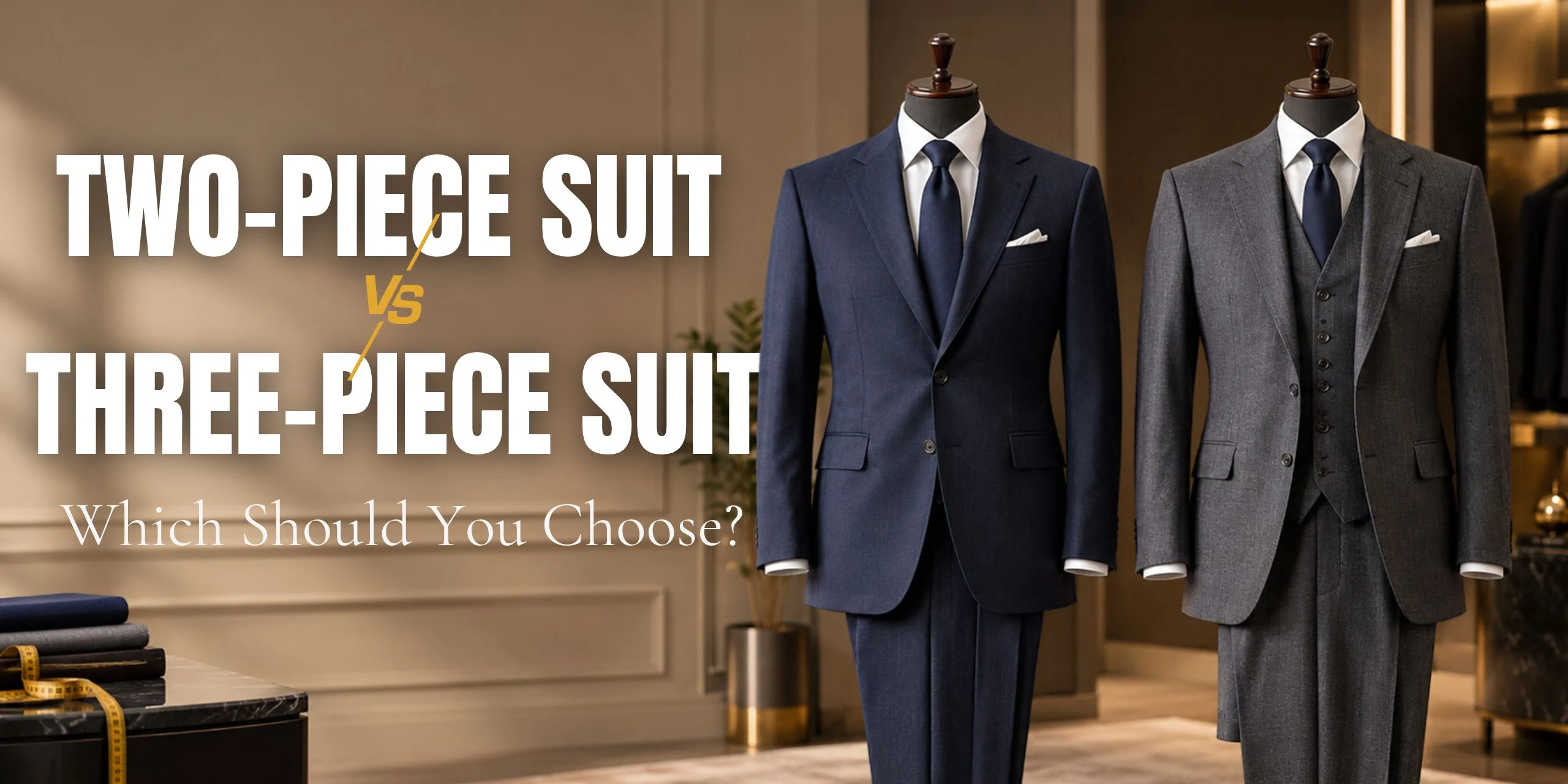
Choosing between a two-piece and a three-piece suit depends on the occasion, personal style, comfort, and the overall look you want to achieve. Both options have a place in a well-dressed man’s wardrobe, from everyday business meetings to weddings, formal dinners, and special events. The right choice is not simply about adding another layer but about finding a suit that complements your body shape, fits the setting, and reflects your personal style.
At Kingsman bespoke tailor in Dubai, we believe a well-tailored suit should balance appearance, comfort, and individuality. Understanding the differences between two-piece and three-piece suits can help you make a confident decision when investing in bespoke menswear.
What Is a Two-Piece Suit?

A two-piece suit consists of two matching garments: a suit jacket and trousers. Both are typically made from the same fabric, creating a coordinated and polished appearance. This classic combination is popular for business attire, office meetings, formal occasions, and everyday professional wear. Its simpler construction also makes it a versatile option for men who want to build a wardrobe around pieces they can style in different ways.
Key Features of a Two-Piece Suit
- Classic appearance: A jacket and matching trousers create a clean, balanced silhouette.
- Versatile styling: The jacket can be worn with different trousers, while the suit trousers can be paired with shirts and knitwear for less formal occasions.
- Comfort and flexibility: With one fewer layer, a two-piece suit can feel lighter and less restrictive.
- Suitable for regular wear: It works well for office environments, business travel, meetings, and social events.
- Easy to adapt: Depending on the fabric, colour, and cut, it can be styled for both formal and smart-casual settings.
When Should You Wear a Two-Piece Suit?
A two-piece suit is an excellent choice when you need a refined appearance without the additional formality of a waistcoat. For daily office wear, a navy or charcoal two-piece suit paired with a well-fitted shirt and leather shoes creates a professional look. For business meetings, a structured jacket with tailored trousers offers a sharp appearance without unnecessary layers.
It is also suitable for dinner invitations, networking events, conferences, and semi-formal occasions where a coordinated suit is appropriate. For men living and working in Dubai, a two-piece suit made from a suitable lightweight fabric can be a practical choice for regular professional wear, particularly when moving between outdoor environments and air-conditioned interiors.
What Is a Three-Piece Suit?

A three-piece suit consists of three matching garments: a suit jacket, trousers, and a waistcoat, also known as a vest. The waistcoat is worn beneath the jacket and adds another layer to the traditional suit silhouette. This style is often associated with classic menswear, weddings, formal celebrations, and occasions where a more dressed-up appearance is desired. However, a three-piece suit can also work in professional settings when the cut, colour, and fabric are chosen appropriately.
Key Features of a Three-Piece Suit
- More structured appearance: A waistcoat adds definition around the torso and creates a layered silhouette.
- Classic sophistication: The additional garment gives the outfit a traditional, carefully coordinated look.
- Flexible styling: You can remove the jacket while retaining a more complete appearance than a shirt and trousers alone.
- Greater customisation: Waistcoat details, including lapels, buttons, pocket styles, and neckline, can be selected to complement the suit.
- Ideal for special occasions: Three-piece suits are popular for weddings, receptions, formal dinners, and important celebrations.
When Should You Wear a Three-Piece Suit?
A three-piece suit is particularly suitable for occasions where you want a more formal or distinctive appearance. For weddings, a matching waistcoat creates a coordinated look that works well in photographs and throughout the celebration. For formal dinners and evening events, a carefully selected three-piece suit can provide a refined alternative to a standard business suit, depending on the dress code.
It can also be worn for corporate presentations, important meetings, and professional events. In these settings, understated colours such as navy, charcoal, and deep grey help maintain a business-appropriate appearance. The waistcoat can be especially useful when you expect to remove your jacket during an event. When properly fitted, it keeps the outfit looking intentional rather than incomplete.
Two-Piece vs Three-Piece Suit: Key Differences

Although both suit styles can be tailored to a high standard, each offers a different balance of formality, versatility, and comfort.
| Feature | Two-Piece Suit | Three-Piece Suit |
|---|---|---|
| Components | Jacket and trousers | Jacket, trousers, and waistcoat |
| Overall Appearance | Clean and understated | Layered and more traditional |
| Formality | Suitable for business and many formal occasions | Often more formal or occasion-focused |
| Comfort | Generally lighter with fewer layers | Can feel warmer because of the additional layer |
| Styling Flexibility | Jacket and trousers can be styled separately | Can be worn with or without the jacket |
| Best Suited For | Office wear, meetings, travel, and everyday formalwear | Weddings, celebrations, formal events, and selected business occasions |
| Fabric Requirements | Matching jacket and trousers | Matching jacket, trousers, and waistcoat |
| Customisation | Jacket cut, lapels, pockets, buttons, and trousers | All two-piece details plus waistcoat design and fit |
1. Consider the Occasion
The occasion should be one of the first factors influencing your decision.
Business and Office Wear
For everyday business attire, a two-piece suit is often the most practical choice. It offers a professional appearance and is easy to wear throughout a working day.
A navy two-piece suit with a white shirt and classic leather shoes is a reliable combination for office meetings, client presentations, and conferences. Charcoal and medium grey are also versatile options.
A three-piece suit can work equally well for executive meetings, presentations, and formal corporate events. The waistcoat adds structure, making it a good option when you want a more traditional business appearance.
Weddings and Engagements
Both styles work well for weddings, but they create different impressions.
A two-piece suit offers a modern, understated look that suits daytime ceremonies, outdoor weddings, and less formal celebrations. It can also be styled with a contrasting shirt, tie, or pocket square. A three-piece suit is a popular choice for grooms who prefer a coordinated and formal appearance. A matching waistcoat adds depth to the outfit and allows the groom to maintain a polished look when the jacket comes off.
For wedding parties, the groom can wear a three-piece suit while the groomsmen wear matching two-piece suits in the same colour family. This creates visual distinction without making the outfits appear disconnected.
Formal Dinners and Special Events
For formal occasions, your choice should reflect the stated dress code.
A two-piece suit can be appropriate for business dinners, evening receptions, and many social events. A three-piece suit offers a more traditional look for celebrations and formal gatherings. However, a three-piece suit does not automatically replace a tuxedo. If an invitation specifies black tie, a dinner suit or tuxedo is generally the more appropriate choice.
2. Think About Dubai's Climate
Climate is an important consideration when choosing tailored menswear in Dubai. Temperatures can be high for much of the year, so fabric weight, breathability, and the number of layers can affect comfort.
A two-piece suit is often a practical choice for daily wear because it requires fewer layers. Lightweight wool, breathable wool blends, and linen or linen-blend fabrics can be suitable options, depending on the occasion and desired structure.
A three-piece suit adds a waistcoat, which can retain additional heat. This does not mean it should be avoided in Dubai. Instead, consider when and where you will wear it.
For indoor weddings, hotel events, evening celebrations, and air-conditioned venues, a three-piece suit can be an excellent choice. For long working days, outdoor functions, or frequent movement between locations, a lightweight two-piece suit may offer greater comfort.
At Kingsman Bespoke, fabric selection and garment construction are important parts of creating a suit that suits both the wearer and the occasion.
3. Choose the Right Fit for Your Body Shape
Fit has a significant impact on how a two-piece or three-piece suit looks. Even high-quality fabric cannot compensate for poor proportions or an uncomfortable fit.
Getting the Two-Piece Fit Right
The jacket should sit naturally across the shoulders without pulling or creating excess fabric. Sleeves should allow an appropriate amount of shirt cuff to show, while the jacket length should complement your proportions.
The trousers should sit comfortably at the waist and fall cleanly through the legs without excessive bunching or pulling.
Because a two-piece suit has fewer components, the jacket and trousers must work together to create a balanced silhouette.
Getting the Three-Piece Fit Right
A three-piece suit requires additional attention because the waistcoat introduces another layer and another set of proportions.
The waistcoat should fit close to the body without pulling across the buttons or creating excessive folds. It should cover the waistband of the trousers, helping maintain a continuous line between the upper and lower garments.
The jacket should sit comfortably over the waistcoat without appearing tight. The waistcoat should also remain neat when you sit, stand, or move.
For a traditional three-piece look, the waistcoat is generally worn with the bottom button undone, although personal styling and the garment’s design may influence the final choice.
Bespoke tailoring allows these elements to be adjusted to your measurements, helping create a balanced result rather than relying on standard sizing alone.
4. Select Colours That Match Your Wardrobe
Colour affects how frequently you can wear a suit and how easily you can coordinate it with shirts, ties, and accessories.
Best Colours for a Two-Piece Suit
- Navy: A versatile choice for business meetings, professional events, and social occasions.
- Charcoal grey: A strong option for formal office wear and evening functions.
- Medium grey: Suitable for daytime business attire and smart events.
- Light grey: Works well for daytime occasions and warmer seasons.
- Beige or light blue: Useful for relaxed settings, summer events, and selected outdoor occasions.
Best Colours for a Three-Piece Suit
- Navy: A classic choice for weddings, business occasions, and formal celebrations.
- Charcoal: Offers a traditional appearance suitable for evening and professional events.
- Deep green: A distinctive option for weddings and occasions where a little more individuality is welcome.
- Burgundy: Can work well for celebrations and statement formalwear.
- Light grey: A refined option for daytime weddings and spring or summer events.
For your first bespoke suit, navy or charcoal is a sensible starting point. Once you have a versatile foundation, you can explore different colours, patterns, and waistcoat combinations.
5. Decide How Much Styling Flexibility You Need
A two-piece suit is generally easier to integrate into a varied wardrobe. The jacket can be worn with contrasting tailored trousers or dark denim in suitable settings. The suit trousers can also be paired with a separate blazer or a smart shirt. These combinations depend on the fabric, pattern, and formality of the garments.
A three-piece suit offers another styling option: removing the jacket while keeping the waistcoat and trousers together. This can be useful at receptions, dinners, and social events where you want to remain dressed up after removing your outer layer.
The waistcoat can also be worn separately with tailored trousers, provided its fabric and design work with the rest of the outfit.
If versatility for everyday wear is your main priority, a two-piece suit is often the easier starting point. If you attend weddings, formal dinners, and special events regularly, a three-piece suit can add useful variety.
6. Consider Your Budget and Long-Term Value
A three-piece suit generally requires more fabric and additional construction for the waistcoat, so it may cost more than a comparable two-piece suit. The final price depends on fabric selection, design complexity, construction methods, and the tailoring service. A two-piece suit may be a sensible first investment if you need a reliable option for regular business and social wear.
A three-piece suit may offer greater value when you have a specific occasion in mind or want the flexibility of a matching waistcoat for formal events. Rather than choosing solely on the initial price, consider how often you will wear the suit, whether it can be styled in different ways, and whether the fit and construction meet your expectations. With bespoke tailoring, the value also lies in selecting details that suit your needs instead of paying for features you are unlikely to use.
7. Explore the Details of Bespoke Tailoring
One advantage of choosing a bespoke suit is the opportunity to personalise the garment.
For a two-piece suit, you can select the lapel style, jacket closure, pocket design, button material, trouser cut, waistband details, and fabric pattern.
A three-piece suit offers these options along with decisions about the waistcoat. You may choose a V-shaped or U-shaped neckline, a single-breasted or double-breasted design, different pocket arrangements, and a button configuration that complements the jacket.
You can also consider whether the waistcoat should match the rest of the suit or introduce a subtle contrast. A matching waistcoat creates a traditional coordinated look, while a carefully chosen contrasting waistcoat can add individuality when the dress code allows it.
The goal is to create a garment that reflects your preferences while remaining appropriate for the occasion.
Common Mistakes to Avoid When Choosing a Suit
Whether you choose a two-piece or three-piece suit, a few common mistakes can affect the final result.
Choosing style over comfort: A suit should allow you to sit, walk, and move naturally. A tight jacket or restrictive waistcoat can make an otherwise attractive outfit uncomfortable.
Ignoring the occasion: A three-piece suit is not always the best option for every formal event. Consider the dress code, venue, and time of day before making a decision.
Selecting unsuitable fabric: Heavy fabrics may be uncomfortable for prolonged wear in warmer conditions. Choose material according to the climate and intended use.
Overlooking trouser fit: The trousers are just as important as the jacket. Excess fabric, pulling, or an unsuitable length can affect the entire silhouette.
Adding too many accessories: A well-fitted suit does not need excessive decoration. Coordinate your shirt, tie, shoes, belt, and pocket square so that they complement the outfit.
Treating a waistcoat as an afterthought: In a three-piece suit, the waistcoat should be designed as part of the complete outfit. Its fit, length, and proportions should work with both the jacket and trousers.

Which Suit Should You Choose?
The right decision becomes easier when you consider your main priorities.
Choose a two-piece suit if you want:
- A versatile suit for regular office wear and business meetings.
- A lighter outfit for everyday use.
- A classic look that works across a range of settings.
- A practical foundation for building your formal wardrobe.
Choose a three-piece suit if you want:
- A more layered and traditional appearance.
- A coordinated outfit for weddings and formal celebrations.
- The option to remove your jacket while keeping a dressed-up look.
- Additional opportunities to personalise your suit through waistcoat design.
If you are building your wardrobe from scratch, start with a well-fitted two-piece suit in navy or charcoal. If you already own a versatile business suit and want something for weddings, receptions, and special occasions, a three-piece suit can be a worthwhile addition.
There is no universal winner. The best suit is the one that fits your body, suits your lifestyle, and makes you feel comfortable and confident.
Find Your Ideal Bespoke Suit with Kingsman Bespoke

At Kingsman Bespoke, we understand that choosing a suit involves more than deciding between two or three pieces. Fabric, fit, construction, colour, and personal style all contribute to the finished garment.
Whether you need a versatile two-piece suit for professional wear or a refined three-piece suit for a wedding or special occasion, bespoke tailoring offers the opportunity to create an outfit around your measurements and preferences.
From selecting the right fabric to refining the fit and finishing details, the process is focused on creating a suit that suits your requirements and the occasions you dress for.
If you are considering a new suit, speak with Kingsman Bespoke about your preferred style, intended use, and tailoring requirements. Together, you can explore the options and choose a suit that complements your wardrobe.
Ready to find your perfect fit? Contact Kingsman Bespoke in Dubai to discuss your bespoke suit requirements.