Skip to content
No products added!
May 18, 2026

Written by kingsmanbespokeae@gmail.com
Wool vs Cashmere Suits: Which Is More Luxurious?
When it comes to luxury menswear, few debates are as timeless as wool vs cashmere suits. Both fabrics are premium, elegant, and widely used in bespoke tailoring, but they differ significantly in texture, performance, durability, and overall feel. Each material carries its own identity in the world of fine tailoring, making the choice more about purpose and lifestyle rather than just appearance.
Wool has long been the foundation of classic tailoring, valued for its structure, versatility, and durability. Cashmere, on the other hand, is celebrated for its exceptional softness, exclusivity, and refined luxury appeal. While both fabrics elevate a suit to a premium level, they behave very differently when worn and maintained.
If you are investing in a high-end suit in Dubai, understanding these differences becomes even more important due to the region’s warm climate and fast-paced professional lifestyle. The right suit fabric choice will not only enhance your appearance but also ensure comfort, practicality, and long-term value depending on how and where you plan to wear your suit.
What Is Wool?
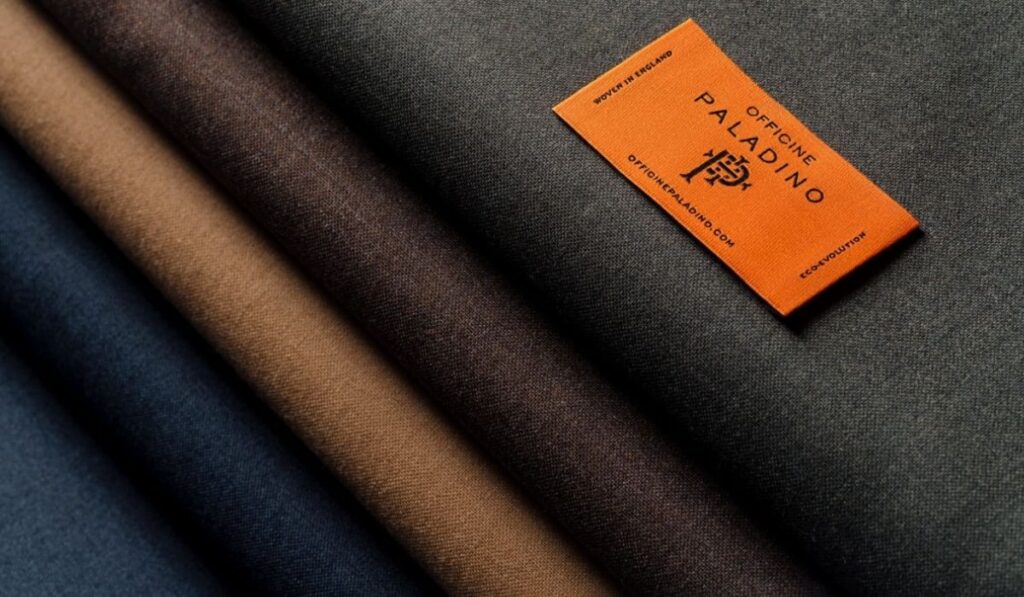
Wool is a natural fiber obtained mainly from sheep. It is the most commonly used fabric in premium suiting due to its balance of comfort, durability, and structure.
Key Features of Wool Suits:
➤ Naturally breathable and temperature-regulating
➤ Holds structure and shape very well
➤ Available in various grades (standard wool to Super 150s+)
➤ Suitable for year-round wear
➤ Highly durable and long-lasting
Wool suits are often the foundation of classic tailoring, especially in British-style suits that emphasize structure and sharp silhouettes.
What Is Cashmere?
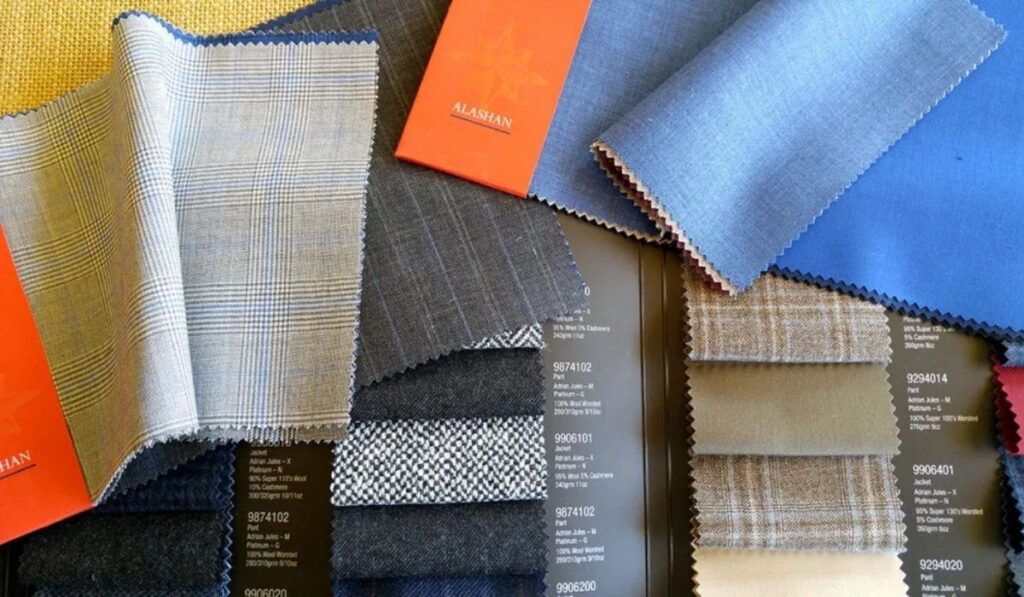
Cashmere is a luxury fiber obtained from the soft undercoat of cashmere goats. It is significantly rarer and softer than wool, making it one of the most premium fabrics in the world.
Key Features of Cashmere Suits:
➤ Exceptionally soft and lightweight
➤ Luxurious drape and smooth finish
➤ Very comfortable against the skin
➤ More delicate compared to wool
➤ Higher price due to limited supply
Cashmere is often blended with wool in suits to combine softness with strength.
Wool vs Cashmere: Key Differences
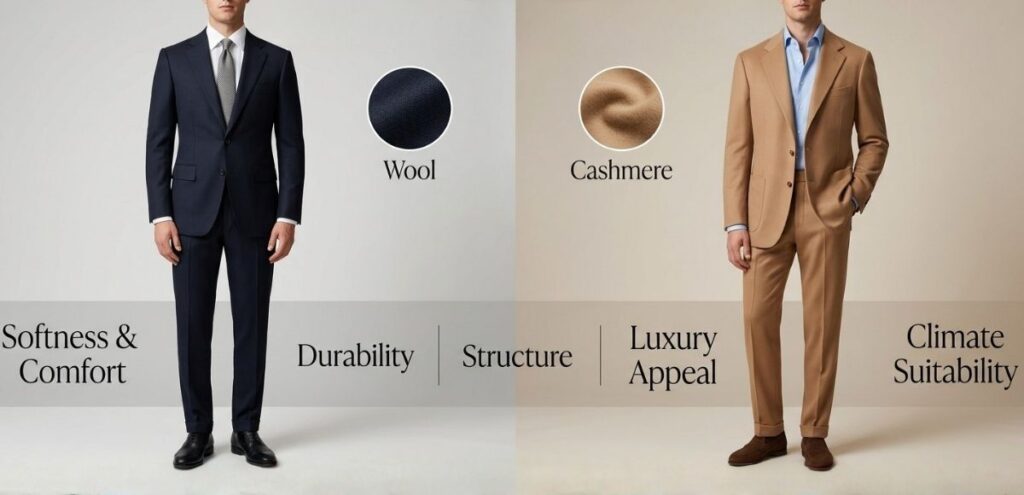
Understanding the real difference between wool and cashmere goes beyond just price or softness. Each fabric behaves differently in terms of comfort, structure, durability, and suitability for climate. Here’s a detailed breakdown to help you choose the right luxury suit fabric.
1. Softness & Comfort
Cashmere is widely known for its exceptional softness. It comes from the fine undercoat of cashmere goats, which makes the fibers incredibly fine, lightweight, and smooth against the skin. When worn as a suit, cashmere delivers a luxurious, almost silky touch that feels gentle and premium throughout the day.
Wool, on the other hand, varies depending on its grade. High-quality wool such as Super 100s to Super 150s can feel very comfortable, but it still maintains a slightly firmer and more structured texture compared to cashmere. This firmness actually contributes to a more defined and formal appearance.
Winner: Cashmere — unmatched softness and comfort for a luxury feel.
2. Durability
Wool is one of the most durable natural fabrics used in tailoring. It has strong elastic fibers that help the fabric return to its original shape even after repeated use. This makes wool suits highly practical for daily wear, especially in professional environments where suits are worn frequently.
Cashmere, while luxurious, is significantly more delicate. The fine fibers are prone to wear, pilling, and damage if not handled properly. It requires careful maintenance, gentle cleaning, and limited use to preserve its quality over time.
Winner: Wool — far superior in strength, longevity, and everyday usability.
3. Structure & Shape
One of wool’s biggest advantages in tailoring is its ability to hold structure. It allows tailors to create sharp shoulders, defined lapels, and clean silhouettes that maintain their shape throughout the day. This makes wool ideal for formal business suits and classic bespoke tailoring.
Cashmere behaves differently due to its soft nature. Instead of holding structure firmly, it drapes more naturally over the body, creating a softer and more relaxed silhouette. While elegant, it lacks the crisp architectural definition that wool provides.
Winner: Wool — better structure, sharper tailoring, and long-lasting shape retention.
4. Luxury Appeal
Cashmere is often associated with exclusivity and refined luxury. Its rarity, softness, and premium pricing position it as a high-end fabric reserved for special garments. Wearing cashmere signals understated elegance and quiet sophistication rather than bold formality.
Wool, while more common, represents timeless classic luxury. High-grade wool suits are the foundation of traditional tailoring and are widely respected for their versatility and elegance. It is the fabric of choice for business leaders and professionals worldwide.
Winner: Cashmere — more exclusive and premium in perception and feel.
5. Climate Suitability
In Dubai’s warm and often humid climate, fabric choice becomes especially important. Lightweight wool is highly breathable and allows air circulation, helping regulate body temperature even in formal settings. This makes it highly practical for year-round business wear.
Cashmere, due to its insulating properties, is designed to retain warmth. While this is ideal for colder climates, it can feel overly warm and less comfortable in Dubai unless used in very light blends or winter-specific suits.
Winner: Wool — more practical, breathable, and climate-appropriate for Dubai.
Which Is More Luxurious?

From a pure luxury perspective, cashmere is considered more luxurious than wool because it is a rare, highly refined natural fiber that delivers an unmatched sense of softness and exclusivity. It comes from the delicate undercoat of cashmere goats, and the limited annual yield makes it significantly more scarce than wool. This rarity alone elevates its status in the luxury fashion world.
Cashmere is also known for its ultra-soft texture, which feels exceptionally smooth, lightweight, and gentle on the skin. This creates a wearing experience that is noticeably more indulgent compared to traditional wool fabrics. In addition, its premium price point reflects both its limited availability and the complex process required to collect and refine the fiber, making it one of the most expensive natural textiles used in tailoring.
Its exclusive appeal further strengthens its position as a luxury fabric, often associated with high-end fashion, refined taste, and understated elegance. However, true luxury in tailoring is not defined by softness alone. It also depends on bespoke suit fit, structure, durability, and real-world practicality, especially when the garment is intended for regular wear or professional use.
This is why many high-end bespoke tailors prefer wool-cashmere blends, as they bring together the strengths of both materials. Wool provides durability and structural integrity, ensuring the suit maintains its sharp silhouette and lasts longer over time. Cashmere, on the other hand, contributes softness and elegance, adding a refined touch and elevated comfort to the final garment.
Final Verdict
Choose Wool Suits if you want durability, strong structure, and dependable everyday elegance that performs well in business and formal environments.
Choose Cashmere Suits if your priority is ultimate softness, exclusivity, and luxury appeal, especially for special occasions or premium events.
Choose Blended Fabrics if you want the perfect balance of both worlds, combining wool’s strength and structure with cashmere’s softness and refined luxury feel.

Experience True Bespoke Luxury in Dubai
At Kingsman Bespoke Tailor in Dubai, every suit is a reflection of refined craftsmanship and personalized luxury. The process begins with a detailed consultation where we understand your lifestyle, profession, preferences, and style goals. This allows us to design a garment that is not just well-fitted, but truly expressive of who you are.
Each suit is crafted with precision and expert tailoring techniques, where every measurement is taken carefully to ensure a flawless silhouette. From shoulder alignment to jacket drape and trouser break, every detail is engineered to enhance your posture and overall appearance.
We combine traditional bespoke craftsmanship with modern tailoring standards, ensuring that every piece delivers both elegance and comfort. Our focus is not only on how the suit looks, but also on how it feels throughout the day—whether you are in a boardroom meeting, attending a formal event, or making a statement at a special occasion.
At Kingsman Bespoke Tailor, attention to detail is at the heart of everything we do. From selecting premium fabrics to hand-finishing techniques, every stage of production is carefully executed to achieve perfection. The result is a suit that fits seamlessly, moves naturally, and elevates your presence with understated confidence.
Ultimately, true bespoke luxury in Dubai is about more than clothing—it is about creating a personal identity through tailoring, where every stitch reflects sophistication, confidence, and individuality.
Conclusion
Both wool and cashmere are premium fabrics in bespoke tailoring. The right choice depends on your lifestyle, usage, and climate. In Dubai’s luxury fashion scene, wool remains the practical king, while cashmere represents refined exclusivity.
A well-tailored suit in either fabric can elevate your presence—but the real luxury always comes from perfect craftsmanship and fit.
Ready to upgrade your wardrobe?
Visit Kingsman Bespoke for a personalized consultation and experience the true meaning of a perfect fit.